

Several years ago, Miss Ayn Rand wrote The Fountainhead. Despite a generally poor press, it is said to have sold some four hundred thousand copies. Thus, it became a wonder of the book trade of a kind that publishers dream about after taxes. So Atlas Shrugged had a first printing of one hundred thousand copies. It appears to be slowly climbing the best-seller lists.
The news about this book seems to me to be that any ordinarily sensible head could not possibly take it seriously, and that, apparently, a good many do. Somebody has called it: "Excruciatingly awful." I find it a remarkably silly book. It is certainly a bumptious one. Its story is preposterous. It reports the final stages of a final conflict (locale: chiefly the United States, some indefinite years hence) between the harried ranks of free enterprise and the "looters." These are proponents of proscriptive taxes, government ownership, labor, etc., etc. The mischief here is that the author, dodging into fiction, nevertheless counts on your reading it as political reality. "This," she is saying in effect, "is how things really are. These are the real issues, the real sides. Only your blindness keeps you from seeing it, which, happily, I have come to rescue you from."
Since a great many of us dislike much that Miss Rand dislikes, quite as heartily as she does, many incline to take her at her word. It is the more persuasive, in some quarters, because the author deals wholly in the blackest blacks and the whitest whites. In this fiction everything, everybody, is either all good or all bad, without any of those intermediate shades which, in life, complicate reality and perplex the eye that seeks to probe it truly. This kind of simplifying pattern, of course, gives charm to most primitive storyknown as: The War between the Children of Light and the Children of Darkness. In modern dress, it is a class war. Both sides to it are caricatures.
The Children of Light are largely operatic caricatures. Insofar as any of them suggests anything known to the business community, they resemble the occasional curmudgeon millionaire, tales about whose outrageously crude and shrewd eccentricities sometimes provide the lighter moments in boardrooms. Otherwise, the Children of Light are geniuses. One of them is named (the only smile you see will be your own): Francisco Domingo Carlos Andres Sebastian dAntonio. This electrifying youth is the world's biggest copper tycoon. Another, no less electrifying, is named: Ragnar Danesjold. He becomes a twentieth-century pirate. All Miss Rand's chief heroes are also breathtakingly beautiful. So is her heroine (she is rather fetchingly vice president in charge of management of a transcontinental railroad).
So much radiant energy might seem to serve a eugenic purpose. For, in this story as in Mark Twain's, "all the knights marry the princess" — though without benefit of clergy. Yet from the impromptu and surprisingly gymnastic matings of the heroine and three of the heroes, no children — it suddenly strikes you — ever result. The possibility is never entertained. And, indeed, the strenuously sterile world of Atlas Shrugged is scarcely a place for children. You speculate that, in life, children probably irk the author and may make her uneasy. How could it be otherwise when she admiringly names a banker character (by what seems to me a humorless master-stroke): Midas Mulligan? You may fool some adults; you can't fool little boys and girls with such stuff — not for long. They may not know just what is out of line, but they stir uneasily. The Children of Darkness are caricatures, too; and they are really oozy. But at least they are caricatures of something identifiable. Their archetypes are Left-Liberals, New Dealers, Welfare Statists, One Worlders, or, at any rate, such ogreish semblances of these as may stalk the nightmares of those who think little about people as people, but tend to think a great deal in labels and effigies. (And neither Right nor Left, be it noted in passing, has a monopoly of such dreamers, though the horrors in their nightmares wear radically different masks and labels.)
In Atlas Shrugged, all this debased inhuman riffraff is lumped as "looters." This is a fairly inspired epithet. It enables the author to skewer on one invective word everything and everybody that she fears and hates. This spares her the playguy business of performing one service that her fiction might have performed, namely: that of examining in human depth how so feeble a lot came to exist at all, let alone be powerful enough to be worth hating and fearing. Instead, she bundles them into one undifferentiated damnation.
"Looters" loot because they believe in Robin Hood, and have got a lot of other people believing in him, too. Robin Hood is the author's image of absolute evil — robbing the strong (and hence good) to give to the weak (and hence no good). All "looters" are base, envious, twisted, malignant minds, motivated wholly by greed for power, combined with the lust of the weak to tear down the strong, out of a deepseated hatred of life and secret longing for destruction and death. There happens to be a tiny (repeat: tiny) seed of truth in this. The full clinical diagnosis can be read in the pages of Friedrich Nietzsche. (Here I must break in with an aside. Miss Rand acknowledges a grudging debt to one, and only one, earlier philosopher: Aristotle. I submit that she is indebted, and much more heavily, to Nietzsche. Just as her operatic businessmen are, in fact, Nietzschean supermen, so her ulcerous leftists are Nietzsche's "last men," both deformed in a way to sicken the fastidious recluse of Sils Maria. And much else comes, consciously or not, from the same source.) Happily, in Atlas Shrugged (though not in life), all the Children of Darkness are utterly incompetent.
So the Children of Light win handily by declaring a general strike of brains, of which they have a monopoly, letting the world go, literally, to smash. In the end, they troop out of their Rocky Mountain hideaway to repossess the ruins. It is then, in the book's last line, that a character traces in the dirt, over the desolate earth," the Sign of the Dollar, in lieu of the Sign of the Cross, and in token that a suitably prostrate mankind is at last ready, for its sins, to be redeemed from the related evils of religion and social reform (the "mysticism of mind" and the "mysticism of muscle").That Dollar Sign is not merely provocative, though we sense a sophomoric intent to raise the pious hair on susceptible heads. More importantly, it is meant to seal the fact that mankind is ready to submit abjectly to an elite of technocrats, and their accessories, in a New Order, enlightened and instructed by Miss Rand's ideas that the good life is one which "has resolved personal worth into exchange value," "has left no other nexus between man and man than naked selfinterest, than callous "cash-payment."' The author is explicit, in fact deafening, about these prerequisites. Lest you should be in any doubt after 1,168 pages, she assures you with a final stamp of the foot in a postscript: "And I mean it." But the words quoted above are those of Karl Marx. He, too, admired "naked self-interest" (in its time and place), and for much the same reasons as Miss Rand: because, he believed, it cleared away the cobwebs of religion and led to prodigies of industrial and cognate accomplishment. The overlap is not as incongruous as it looks. Atlas Shrugged can be called a novel only by devaluing the term. It is a massive tract for the times. Its story merely serves Miss Rand to get the customers inside the tent, and as a soapbox for delivering her Message. The Message is the thing. It is, in sum, a forthright philosophic materialism. Upperclassmen might incline to sniff and say that the author has, with vast effort, contrived a simple materialist system, one, intellectually, at about the stage of the oxcart, though without mastering the principle of the wheel. Like any consistent materialism, this one begins by rejecting God, religion, original sin, etc., etc. (This book's aggressive atheism and rather unbuttoned "higher morality," which chiefly outrage some readers, are, in fact, secondary ripples, and result inevitably from its underpinning premises.) Thus, Randian Man, like Marxian Man, is made the center of a godless world.
At that point, in any materialism, the main possibilities open up to Man. 1) His tragic fate becomes, without God, more tragic and much lonelier. In general, the tragedy deepens according to the degree of pessimism or stoicism with which he conducts his "hopeless encounter between human questioning and the silent universe." Or, 2) Man's fate ceases to be tragic at all. Tragedy is bypassed by the pursuit of happiness. Tragedy is henceforth pointless. Henceforth man's fate, without God, is up to him, and to him alone. His happiness, in strict materialist terms, lies with his own workaday hands and ingenious brain. His happiness becomes, in Miss Rand's words, "the moral purpose of his fife."
Here occurs a little rub whose effects are just as observable in a free-enterprise system, which is in practice materialist (whatever else it claims or supposes itself to be), as they would be under an atheist socialism, if one were ever to deliver that material abundance that all promise. The rub is that the pursuit of happiness, as an end in itself, tends automatically, and widely, to be replaced by the pursuit of pleasure, with a consequent general softening of the fibers of will, intelligence, spirit. No doubt, Miss Rand has brooded upon that little rub. Hence in part, I presume, her insistence on man as a heroic being" With productive achievement as his noblest activity." For, if Man's heroism" (some will prefer to say: human dignity") no longer derives from God, or is not a function of that godless integrity which was a root of Nietzsche's anguish, then Man becomes merely the most consuming of animals, with glut as the condition of his happiness and its replenishment his foremost activity. So Randian Man, at least in his ruling caste, has to be held "heroic" in order not to be beastly. And this, of course, suits the author's economics and the politics that must arise from them. For politics, of course, arise, though the author of Atlas Shrugged stares stonily past them, as if this book were not what, in fact, it is, essentially — a political book. And here begins mischief. Systems of philosophic materialism, so long as they merely circle outside this world's atmosphere, matter little to most of us. The trouble is that they keep coming down to earth. It is when a system of materialist ideas presumes to give positive answers to real problems of our real life that mischief starts. In an age like ours, in which a highly complex technological society is everywhere in a high state of instability, such answers, however philosophic, translate quickly into political realities. And in the degree to which problems of complexity and instability are most bewildering to masses of men, a temptation sets in to let some species of Big Brother solve and supervise them.
One Big Brother is, of course, a socializing elite (as we know, several cut-rate brands are on the shelves). Miss Rand, as the enemy of any socializing force, calls in a Big Brother of her own contriving to do battle with the other. In the name of free enterprise, therefore, she plumps for a technocratic elite (I find no more inclusive word than technocratic to bracket the industrial-financial-engineering caste she seems to have in mind). When she calls "productive achievement" man's noblest activity," she means, almost exclusively, technological achievement, supervised by such a managerial political bureau. She might object that she means much, much more; and we can freely entertain her objections. But, in sum, that is just what she means. For that is what, in reality, it works out to. And in reality, too, by contrast with fiction, this can only head into a dictatorship, however benign, living and acting beyond good and evil, a law unto itself (as Miss Rand believes it should be), and feeling any restraint on itself as, in practice, criminal, and, in morals, vicious (as Miss Rand clearly feels it to be). Of course, Miss Rand nowhere calls for a dictatorship. I take her to be calling for an aristocracy of talents. We cannot labor here why, in the modern world, the pre-conditions for aristocracy, an organic growth, no longer exist, so that the impulse toward aristocracy always emerges now in the form of dictatorship.
Nor has the author, apparently, brooded on the degree to which, in a wicked world, a materialism of the Right and a materialism of the Left first surprisingly resemble, then, in action, tend to blend each with each, because, while differing at the top in avowed purpose, and possibly in conflict there, at bottom they are much the same thing. The embarrassing similarities between Hitler's National Socialism and Stalin's brand of Communism are familiar. For the world, as seen in materialist view from the Right, scarcely differs from the same world seen in materialist view from the Left. The question becomes chiefly: who is to run that world in whose interests, or perhaps, at best, who can run it more efficiently?
Something of this implication is fixed in the book's dictatorial tone, which is much its most striking feature. Out of a lifetime of reading, I can recall no other book in which a tone of overriding arrogance was so implacably sustained. Its shrillness is without reprieve. Its dogmatism is without appeal. In addition, the mind which finds this tone natural to it shares other characteristics of its type. 1) It consistently mistakes raw force for strength, and the rawer the force, the more reverent the posture of the mind before it. 2) It supposes itself to be the bringer of a final revelation. Therefore, resistance to the Message cannot be tolerated because disagreement can never be merely honest, prudent, or just humanly fallible. Dissent from revelation so final (because, the author would say, so reasonable) can only be willfully wicked. There are ways of dealing with such wickedness, and, in fact, right reason itself enjoins them. From almost any page of Atlas Shrugged, a voice can be heard, from painful necessity, commanding: "To a gas chamber — go!" The same inflexibly self-righteous stance results, too (in the total absence of any saving humor), in odd extravagances of inflection and gesture-that Dollar Sign, for example. At first, we try to tell ourselves that these are just lapses, that this mind has, somehow, mislaid the discriminating knack that most of us pray will warn us in time of the difference between what is effective and firm, and what is wildly grotesque and excessive. Soon we suspect something worse. We suspect that this mind finds, precisely in extravagance, some exalting merit; feels a surging release of power and passion precisely in smashing up the house. A tornado might feel this way, or Carrie Nation.
We struggle to be just. For we cannot help feeling at least a sympathetic pain before the sheer labor, discipline, and patient craftsmanship that went to making this mountain of words. But the words keep shouting us down. In the end that tone dominates. But it should be its own antidote, warning us that anything it shouts is best taken with the usual reservations with which we might sip a patent medicine. Some may like the flavor. In any case, the brew is probably without lasting ill effects. But it is not a cure for anything. Nor would we, ordinarily, place much confidence in the diagnosis of a doctor who supposes that the Hippocratic Oath is a kind of curse.
28 December, 2005
Book Department: Atlas Shrugged
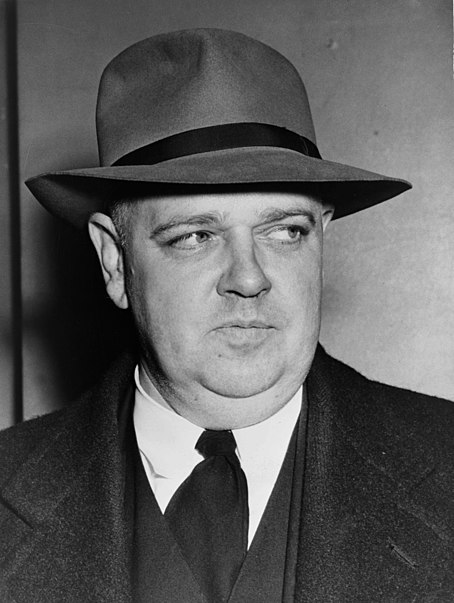
This review of the Anarcho-Capitalist novel Atlas Shrugged by the famous ex-Comintern spy become Quaker, Whittaker Chambers appeared in the 28 December 1957, issue of the reactionary bi-weekly National Review.


15 December, 2002

18 April, 1994
Before We Eulogize Richard Milhous Nixon
Thursday night, on the radio, I listened to a round-table of pundits assessing the career of Richard Nixon. There was also a phone call from a woman who, almost in tears, berated the panel members for speaking negatively about Nixon “while he lays on his death bed!” I knew then that Mr. Nixon was not long for this world and that soon the empathy that comes with the passing of any human life would spawn a whole slew of sympathetic eulogies for our former president. While I am not one to act vindictively, I feel that at this juncture we must remind ourselves of what Mr. Nixon’s real legacy was.
 Before we eulogize him, we should remember that Richard Milhous Nixon started his career in public life as a Red-Baiter, a character assassin, and demagogue. He was of the same ilk as Joe McCarthy, Martin Dies, and Roy Cohn. Let us not forget that their cheap grandstanding, fishing expeditions, and guilt-by-association destroyed reputations, careers, and lives. That Nixon’s wanton destruction of Alger Hiss set the tone for the arbitrary dismissal of thousands of teachers, professors, and loyal government employees who’s only crime was to have taken the first amendment at face value and expressed an opinion that was too pink for the current fashion. That America in the 1950’s lived under a dark cloud of loyalty oaths, black lists, and enforced conformism was, in some small part, due to Richard Milhous Nixon.
Those who would eulogize Nixon often talk about his “achievements” in foreign policy. After all, they would say, he opened up diplomatic relations with China, only twenty years after making political hay by accusing the Truman administration of “loosing” China. He sold tons and tons of wheat to the Soviet Union and thus propped-up the failing economy of our supposed enemy while simultaneously bailing-out the ruinous “hedge-row to hedge-row” polices of agricultural secretary Earl Butz. All the while he kept a hard-line on communism though! He strictly enforced our blockade on tiny Cuba, and supported courageous anti-communists like Franco and Somoza. But, they often say, his real achievement was that he “lessened the tensions” of the Cold War and brought on a period of “detente.”
But tell me: why should we give Nixon any credit for lessening the tensions of the Cold War, when he was one of the saber-rattling demagogues who started the Cold War?
And what about Vietnam? Nixon said he had a “secret plan” to end the war, but then he prolonged it for five years, thus delaying the inevitable at a cost of some 20,000 American lives. He lied to Congress and the American people by ordering 3,500 secret bombing missions over Cambodia. He then went on to break international law by invading not only Cambodia, but Laos as well. His invasion of Cambodia turned a stable, neutral country into a war zone and paved the way for Pol Pot. In order to justify our continued involvement with a corrupt South Vietnamese government and a losing war, he created the myth of unaccounted for M.I.A.’s and P.O.W.’s; an insidious lie that has become part of our national folklore. Rather than admit that Vietnam was a strategic defeat for the United States, Nixon perpetuated the myth that America was never beaten in Vietnam, rather, we were stabbed-in-the-back by dissenters at home; just as the Nazi would have you believe that Germany lost W.W.I because she was stabbed-in-the-back by Jews and bankers. The lies, distortions, and deceptions of Nixon’s Vietnam policy almost insure that America will be irreparably divided on this issue for a generation or more.
But let us suppose that the five extra years of fighting did improve our bargaining position, the South fell just as the Pentagon Papers said it would. But those were real boys fighting for those five years, and now some of them are really dead.
Shall we eulogize Nixon for his domestic achievements? Like domestic spying and counter-intelligence operations? Let me recall for you that it was Nixon’s jimmying with wage/price controls, tax cuts, and the money supply in 1971, that led to a false prosperity just in time for the ’72 elections, and then brought on the recession of ’73-74. What about the permanent decline in manufacturing and wages that has taken place in America since 1972? Also worth pointing out is that we haven’t had a balanced budget since Johnson was in the White House. And it was Nixon who first politicized the Supreme Court by promising to appoint conservatives who shared his “law and order” philosophy. But in fact it is difficult to point to his domestic achievements because his was a legacy of largely neglecting the pressing social problems of the day by proposing useless diversions; smoke-and-mirrors such as “Revenue Sharing,” privatizing the post office, and welfare or health-care reforms that never came to pass.
Before we eulogize Richard Milhous Nixon, shouldn’t we consider the kind of a man he was personally? Perhaps we could assess this by the company he kept. There were the thorough-going mediocrities he appointed to cabinet positions, Laird, Butz, and Hickle; the utterly lame Supreme Court appointments of Hainsworth, Carswell, and Rehnquist; and of course his choice of the corrupt non-entity, Agnew, and later the bungling dullard, Ford for the second highest office in the land. Then there were the fanatics who ran his day-to-day affairs, like Haldeman, Ehrlichman, and Colson. And there were schemers from whom he sought advice, like Dean, Haig, and Kissinger. There were his millionaire buddies, B.B. Rebozo and W. Clement Stone. And what are we to make of weird characters like G. Gordon Liddy, Martha Mitchell, and Whitaker Chambers? Would you like to know any of these people?
And just what kind of man draws-up a “White House enemies list,” or orders the plumbers squad to break-in to the office of Daniel Elsberg’s psychiatrist, or secretly tapes supposedly confidential White House conversations? Are these the actions of an admirable man or a deceitful paranoiac?
And what kind of man orders a start to bombing on Christmas day?
Before we eulogize Richard Milhous Nixon let us consider the fraud that characterized his politics. Starting with his character assassination of Jerry Voorhis, continuing with his red-bating and smearing of Helen Gahagan Douglas, the political slush funds, the false candor of the Checkers Speech, and the out-right lie of having a “secret plan” to end the war in Vietnam, on through the massive illegal fund-raising by C.R.E.E.P during the ’72 campaign, Richard Nixon leaves a malodorous trail of dirty tricks and fraud dressed-up with empty rhetoric about “honesty” and “duty.” And there was also the divisive “Southern Strategy” and the coded racism of his calls for “law and order.” Aside from a score of Watergate convictions, there were also the separate scandals that fell close associates John Connelly and Spiro Agnew. And let us not over-look the financial shenanigans that begin with using campaign funds to pay his mortgage in the late 40’s, continue with the lavishing of tax-payer dollars on the “western White House” at San Clemente, and end with his failure to report $250,000- in income to the I.R.S. while president.
And have you forgotten swamp-like mire of Watergate? How the Committee to Re-Elect the President formed a “Plumbers Squad” for break-ins and dirty tricks. The willful cover-up, “stone-walling” as it were, by the White House when these “plumbers” are caught red-handed. The foot-dragging by the F.B.I. and Justice Department. The tapes, and the gap in the tape, and the bogus transcripts. The court orders, the injunctions, and the “Saturday night massacre.” The back-pedaling, the spurious dissimulations, the clap-trap about “executive privilege,” “protecting the Office of the Presidency,” and all the rest of it. Do you remember the impeachment hearings? Well I do, and it was a national disgrace. But the crowning affront to the public trust is that, because he was pardoned by president Ford, the exposure of these crimes in open court has never taken place and Richard Nixon will forever remain an “un-indicted co-conspirator.”
Nixon’s lasting contribution to the political life of this country is a legacy of distrust for our leaders and a permanent lowering of standards for public figures. When Franklin Roosevelt died, men wept openly on the street; can you imagine anyone crying over the peaceful death of a President ever again?
While L.B.J. had a genuine concern for the poor of this country, just as Hubert Humphrey was a tireless champion for the working man, and Ike stood as almost a father figure to “Middle America,” could you name any group, principle, or idea that Richard Nixon stood for? Even Herbert Hoover was eulogized as “the Great Humanitarian” for his organization of the Belgian Relief Effort. Is there any humanitarian act, charitable effort, or self-less gesture associated with Richard Milhous Nixon? I don’t think so, but you could always call up Helen Gahagan Douglas,

Alger Hiss,
or Daniel Ellsberg and ask them!
 Before we eulogize him, we should remember that Richard Milhous Nixon started his career in public life as a Red-Baiter, a character assassin, and demagogue. He was of the same ilk as Joe McCarthy, Martin Dies, and Roy Cohn. Let us not forget that their cheap grandstanding, fishing expeditions, and guilt-by-association destroyed reputations, careers, and lives. That Nixon’s wanton destruction of Alger Hiss set the tone for the arbitrary dismissal of thousands of teachers, professors, and loyal government employees who’s only crime was to have taken the first amendment at face value and expressed an opinion that was too pink for the current fashion. That America in the 1950’s lived under a dark cloud of loyalty oaths, black lists, and enforced conformism was, in some small part, due to Richard Milhous Nixon.
 Those who would eulogize Nixon often talk about his “achievements” in foreign policy. After all, they would say, he opened up diplomatic relations with China, only twenty years after making political hay by accusing the Truman administration of “loosing” China. He sold tons and tons of wheat to the Soviet Union and thus propped-up the failing economy of our supposed enemy while simultaneously bailing-out the ruinous “hedge-row to hedge-row” polices of agricultural secretary Earl Butz. All the while he kept a hard-line on communism though! He strictly enforced our blockade on tiny Cuba, and supported courageous anti-communists like Franco and Somoza. But, they often say, his real achievement was that he “lessened the tensions” of the Cold War and brought on a period of “detente.”
But tell me: why should we give Nixon any credit for lessening the tensions of the Cold War, when he was one of the saber-rattling demagogues who started the Cold War?
And what about Vietnam? Nixon said he had a “secret plan” to end the war, but then he prolonged it for five years, thus delaying the inevitable at a cost of some 20,000 American lives. He lied to Congress and the American people by ordering 3,500 secret bombing missions over Cambodia. He then went on to break international law by invading not only Cambodia, but Laos as well. His invasion of Cambodia turned a stable, neutral country into a war zone and paved the way for Pol Pot. In order to justify our continued involvement with a corrupt South Vietnamese government and a losing war, he created the myth of unaccounted for M.I.A.’s and P.O.W.’s; an insidious lie that has become part of our national folklore. Rather than admit that Vietnam was a strategic defeat for the United States, Nixon perpetuated the myth that America was never beaten in Vietnam, rather, we were stabbed-in-the-back by dissenters at home; just as the Nazi would have you believe that Germany lost W.W.I because she was stabbed-in-the-back by Jews and bankers. The lies, distortions, and deceptions of Nixon’s Vietnam policy almost insure that America will be irreparably divided on this issue for a generation or more.
But let us suppose that the five extra years of fighting did improve our bargaining position, the South fell just as the Pentagon Papers said it would. But those were real boys fighting for those five years, and now some of them are really dead.
Shall we eulogize Nixon for his domestic achievements? Like domestic spying and counter-intelligence operations? Let me recall for you that it was Nixon’s jimmying with wage/price controls, tax cuts, and the money supply in 1971, that led to a false prosperity just in time for the ’72 elections, and then brought on the recession of ’73-74. What about the permanent decline in manufacturing and wages that has taken place in America since 1972? Also worth pointing out is that we haven’t had a balanced budget since Johnson was in the White House. And it was Nixon who first politicized the Supreme Court by promising to appoint conservatives who shared his “law and order” philosophy. But in fact it is difficult to point to his domestic achievements because his was a legacy of largely neglecting the pressing social problems of the day by proposing useless diversions; smoke-and-mirrors such as “Revenue Sharing,” privatizing the post office, and welfare or health-care reforms that never came to pass.
Before we eulogize Richard Milhous Nixon, shouldn’t we consider the kind of a man he was personally? Perhaps we could assess this by the company he kept. There were the thorough-going mediocrities he appointed to cabinet positions, Laird, Butz, and Hickle; the utterly lame Supreme Court appointments of Hainsworth, Carswell, and Rehnquist; and of course his choice of the corrupt non-entity, Agnew, and later the bungling dullard, Ford for the second highest office in the land. Then there were the fanatics who ran his day-to-day affairs, like Haldeman, Ehrlichman, and Colson. And there were schemers from whom he sought advice, like Dean, Haig, and Kissinger. There were his millionaire buddies, B.B. Rebozo and W. Clement Stone. And what are we to make of weird characters like G. Gordon Liddy, Martha Mitchell, and Whitaker Chambers? Would you like to know any of these people?
And just what kind of man draws-up a “White House enemies list,” or orders the plumbers squad to break-in to the office of Daniel Elsberg’s psychiatrist, or secretly tapes supposedly confidential White House conversations? Are these the actions of an admirable man or a deceitful paranoiac?
And what kind of man orders a start to bombing on Christmas day?
Before we eulogize Richard Milhous Nixon let us consider the fraud that characterized his politics. Starting with his character assassination of Jerry Voorhis, continuing with his red-bating and smearing of Helen Gahagan Douglas, the political slush funds, the false candor of the Checkers Speech, and the out-right lie of having a “secret plan” to end the war in Vietnam, on through the massive illegal fund-raising by C.R.E.E.P during the ’72 campaign, Richard Nixon leaves a malodorous trail of dirty tricks and fraud dressed-up with empty rhetoric about “honesty” and “duty.” And there was also the divisive “Southern Strategy” and the coded racism of his calls for “law and order.” Aside from a score of Watergate convictions, there were also the separate scandals that fell close associates John Connelly and Spiro Agnew. And let us not over-look the financial shenanigans that begin with using campaign funds to pay his mortgage in the late 40’s, continue with the lavishing of tax-payer dollars on the “western White House” at San Clemente, and end with his failure to report $250,000- in income to the I.R.S. while president.
And have you forgotten swamp-like mire of Watergate? How the Committee to Re-Elect the President formed a “Plumbers Squad” for break-ins and dirty tricks. The willful cover-up, “stone-walling” as it were, by the White House when these “plumbers” are caught red-handed. The foot-dragging by the F.B.I. and Justice Department. The tapes, and the gap in the tape, and the bogus transcripts. The court orders, the injunctions, and the “Saturday night massacre.” The back-pedaling, the spurious dissimulations, the clap-trap about “executive privilege,” “protecting the Office of the Presidency,” and all the rest of it. Do you remember the impeachment hearings? Well I do, and it was a national disgrace. But the crowning affront to the public trust is that, because he was pardoned by president Ford, the exposure of these crimes in open court has never taken place and Richard Nixon will forever remain an “un-indicted co-conspirator.”
Nixon’s lasting contribution to the political life of this country is a legacy of distrust for our leaders and a permanent lowering of standards for public figures. When Franklin Roosevelt died, men wept openly on the street; can you imagine anyone crying over the peaceful death of a President ever again?
While L.B.J. had a genuine concern for the poor of this country, just as Hubert Humphrey was a tireless champion for the working man, and Ike stood as almost a father figure to “Middle America,” could you name any group, principle, or idea that Richard Nixon stood for? Even Herbert Hoover was eulogized as “the Great Humanitarian” for his organization of the Belgian Relief Effort. Is there any humanitarian act, charitable effort, or self-less gesture associated with Richard Milhous Nixon? I don’t think so, but you could always call up Helen Gahagan Douglas,

Alger Hiss,

or Daniel Ellsberg and ask them!

Subscribe to:
Posts (Atom)
